
Five Garment Fitting Habits That Make Better Product Founders
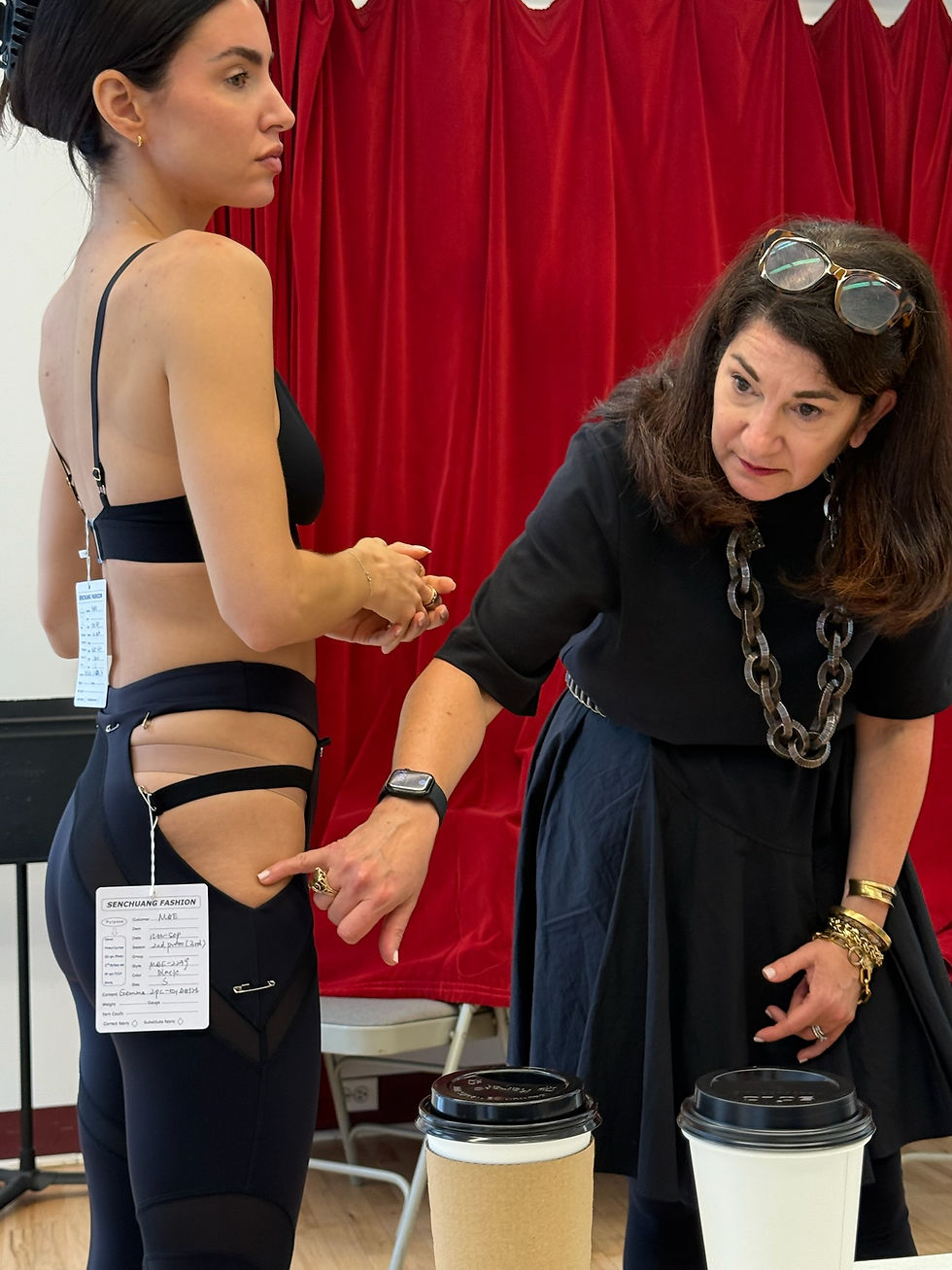
Great products aren't built in a single fitting. They're built through the habits that make every fitting more valuable.
If you've been following this newsletter for a while, you know I'm a big believer that great products are built long before they reach production. They're built through hundreds of technical decisions made throughout development. That idea came into sharp focus during a conversation I had this week with a founder who was surprised that the factory developing her prototype wouldn't share the pattern or tech pack they had created. She had provided an AI rendering of her idea, the factory transformed it into a wearable garment, and understandably, she felt it was still "her design."
The concept was hers. The execution wasn't.
A sketch, whether drawn by hand or generated with AI, is only the starting point. The technical thinking that transforms it into a manufacturable product is where the real design happens. Fabric choices, seam placement, construction methods, pattern-making, grading, fit, trims, and hundreds of seemingly small decisions are what turn an idea into a garment. Those decisions have value because someone had to make them.
The encouraging part is that you don't need to become a pattern-maker or technical designer overnight. But you do need to begin thinking like a product developer. Every fitting, every sketch, and every prototype is an opportunity to train your eye and make better decisions.
The five habits below aren't simply fitting tips. There are ways to think more like the people who build great products every day.

1. Train Your Eye Before You Build
Too many founders hand over a sketch, wait to see what comes back from the factory, and only then begin making design decisions. By then, you've already given away one of the biggest opportunities to shape your product.
Don't.
Buy an inexpensive garment that gets you close. Amazon, a discount retailer, or even something from your own closet, can become a surprisingly effective starting point. You're not buying it because it's right. You're buying it because it gives you something to work on.
Pin new style lines. Adjust lengths. Cut openings. Fold fabric. Experiment with proportions. Document the flat measurements you establish. These inexpensive garments become canvases for problem-solving long before you've invested in another prototype.
Flat sketches tell you very little about how a garment behaves. Put it on a body and everything changes. A gusset suddenly feels too wide. A leg opening starts cutting in. Back coverage disappears the moment someone sits down. A seam that looked insignificant on paper becomes surprisingly uncomfortable.
Whenever possible, try it on yourself if you're designing for your own customer. While I'm a huge proponent of professional fit models, you don't have to wait until that stage to begin learning.
You're not just evaluating a garment. You're training your eye to understand the relationship between a flat design and a moving body.
2. Learn to Read What Your Fabric Is Telling You
Measurements matter. Fabric behavior often matters even more.
I've watched countless fittings where everyone focused on measurements while completely missing what the fabric was communicating. Sometimes the garment needs the fabric to work harder. Sometimes the fabric is doing far too much work. The solution isn't always changing a measurement. Sometimes it's changing how the fabric is being asked to perform.
I used to joke that watching my sons play hockey and lacrosse mostly consisted of me pretending I knew what was happening. Dave would lean over and say, "When in doubt, it's usually offsides."
Development can feel a little like that.
At first, you aren't always sure what you're seeing. But the more fittings you attend, the more patterns begin to emerge.
A bra cup that needs more capacity often doesn't need to become bigger everywhere. Sometimes it simply needs to open where the fabric has become overworked. Learning to recognize those moments is one of the most valuable product development skills you'll build.
3. Invest in the Tools That Improve Your Thinking
You're building a product company. Invest in the tools that help you think like one.
You don't need an industrial sewing room, but you do need reliable tools that make evaluating product easier and more accurate.
A few of my favorites include a split tape measure with both millimeters and inches on the same side (buy several—they disappear), clear rulers, retractable tape measures, quality paper and fabric scissors, T-pins, strong safety pins, tailor's chalk, washable Crayola markers for marking garments or forms, and a simple sewing kit.
The same philosophy applies to drawing.
Draw your ideas on a croquis. Draw them flat. Draw the inside construction, even if no one else will ever see it.
Drawing forces technical thinking. Every line requires a decision, and better decisions create better products.
4. Evaluate Your Product the Way It Will Actually Be Worn
Garments don't exist in isolation. They exist as part of someone's life. At Victoria's Secret, we always kept the perfect white T-shirt on hand when fitting T-shirt bras. Not because we loved white T-shirts, but because that's how customers actually wore them. And we didn't want them to be disappointed when they did.
Did the neckline show?
Did the bra create the intended silhouette?
Did it smooth the way we expected?
Those are questions you can't answer by looking at the bra alone.
The same thinking applies to every category.
If you're developing a swim cover-up, does it actually provide enough coverage to walk into a restaurant? Can it be tied or belted comfortably? If you're designing a top that's meant to tuck into trousers, fit it with those trousers every single time.
Evaluate products in the context your customer will use them, not in isolation.
5. Build a Fitting Process You Can Repeat
Development moves quickly. Fittings become even busier. Multiple people, multiple opinions, limited time.
A simple process keeps everyone focused.
Evaluate every garment from the top down. Neckline. Shoulders. Bust. Waist. Hip. Leg opening. Hem.
Every time.
You'll miss less, your notes will become more organized, and your factory will receive feedback that's much easier to understand and implement.
I also recommend creating a running document for every collection. Before I ever walk into a fitting, I've already spent time with each sample, making observations in the quiet of my office. That allows me to separate my own assessment from the fast-paced conversation that happens during the fitting itself.
After the fitting, recap every style immediately while the discussion is still fresh. Your future self and your factory will thank you.
Better Habits Build Better Products
Product development is rarely without hiccups. Some are more predictable than others. The goal isn't to eliminate every problem. It's to catch as many of them as possible before they become expensive.
Every fitting teaches you something. Every sketch sharpens your thinking. Every prototype gives you another opportunity to become a better product founder.
Over time, that's what separates founders who simply have good ideas from those who consistently build exceptional products.
Next in the Series
A great fitting is only as valuable as the feedback it yields.
Next time, we'll look at one of the most overlooked skills in product development: how to give clear, actionable factory feedback that gets better results, reduces unnecessary sample rounds, and helps your vendor solve the right problems the first time.


Comments